Industrial Spray Painting Services
Flexible liquid finishing for colour, coverage and protection.
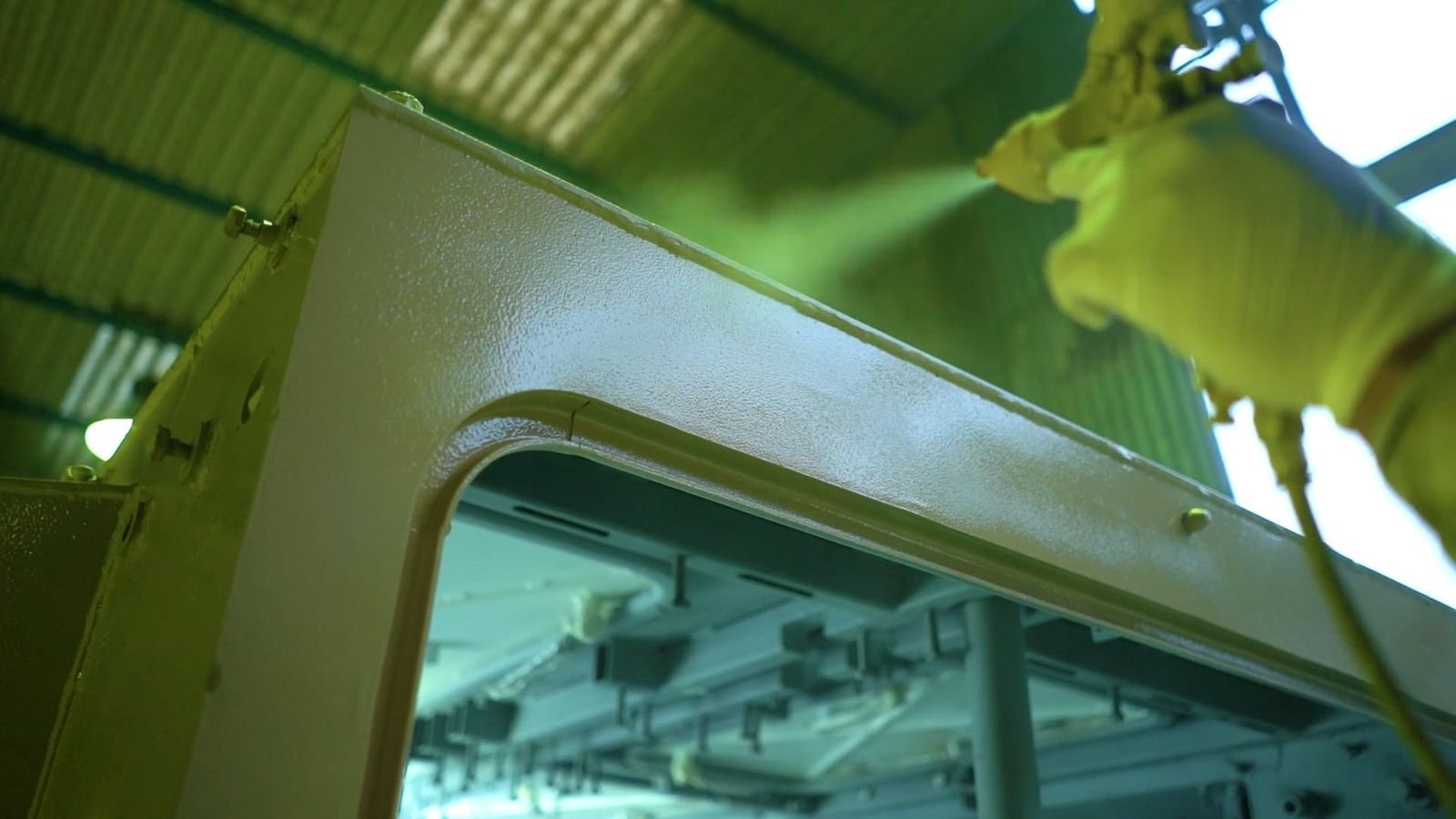
Industrial spray painting remains one of the most flexible finishing methods available — suited to a wide range of component sizes, shapes and materials, and to jobs where colour flexibility or a specific finish is the priority.
Shrinath Coatings provides spray painting for components and assemblies that need a controlled, even, liquid-applied finish for protection and appearance.
What is Spray Painting?
Industrial spray painting applies liquid paint to a prepared surface using spray equipment, building an even coat across the component. Compared with powder coating and CED coating, liquid spray painting offers flexibility for larger or irregularly shaped parts, small batch runs, specific colour requirements, and components that are not suited to oven curing or full immersion.
A properly applied spray-painted finish protects the underlying metal from the environment while giving the component a consistent, finished appearance.
How the Process Works
A high-level look at how spray painting is applied. Exact parameters are confirmed per job based on the component and substrate.
Surface preparation
The component surface is prepared so the paint bonds well and the finish is consistent — the right preparation depends on the substrate and its condition.
Masking
Any areas that should not be painted (threads, machined faces, fittings) are masked off before spraying.
Spray application
Paint is applied in controlled, even coats using spray equipment to achieve consistent coverage and finish across the component.
Drying / curing & inspection
The painted component is dried or cured as appropriate for the coating used, then inspected for coverage and finish quality.
Why Choose Spray Painting
- High flexibility in colour selection and finish (gloss, satin, matte)
- Suitable for large, irregular or oversized components
- Practical for smaller batches and touch-up or repair work
- Combines protective coverage with a finished, presentable appearance
Suitable Applications
- Larger or irregularly shaped metal components
- Machinery frames and equipment bodies
- Fabricated assemblies and structures
- Components requiring specific colour matching
- Touch-up and finishing work alongside other processes
Process Considerations
- Spray painting can be used on a broader range of substrates and component sizes than powder coating or CED coating, making it useful where those processes are not practical.
- The right paint system and number of coats depends on the substrate, expected exposure and finish requirement — discuss your application when requesting a quote.
- For components where the full surface (including internal cavities) needs uniform coverage, CED coating may be a more suitable option — ask if you are unsure which process fits your part.
Common Questions About Spray Painting
What is industrial spray painting used for?
Industrial spray painting is used to protect and finish metal components and assemblies, particularly larger or irregularly shaped parts, smaller batches, and jobs with specific colour requirements.
How is spray painting different from powder coating?
Spray painting applies a liquid paint that air-dries or cures, while powder coating applies a dry powder that is cured by heat into a harder, more chip-resistant film. Spray painting offers more flexibility for large or unusually shaped components and small batches.
Can spray painting be used for corrosion protection?
A properly applied paint system can provide protective coverage against environmental exposure. The right system depends on the substrate and the conditions the component will face — this is assessed per job.
What information helps you quote a spray painting job?
Component material, size, quantity, required colour/finish and intended use help in preparing an accurate quote. Photos, drawings or a sample part are useful.