Industrial Powder Coating Services
A durable, dry-applied finish for long-term protection.
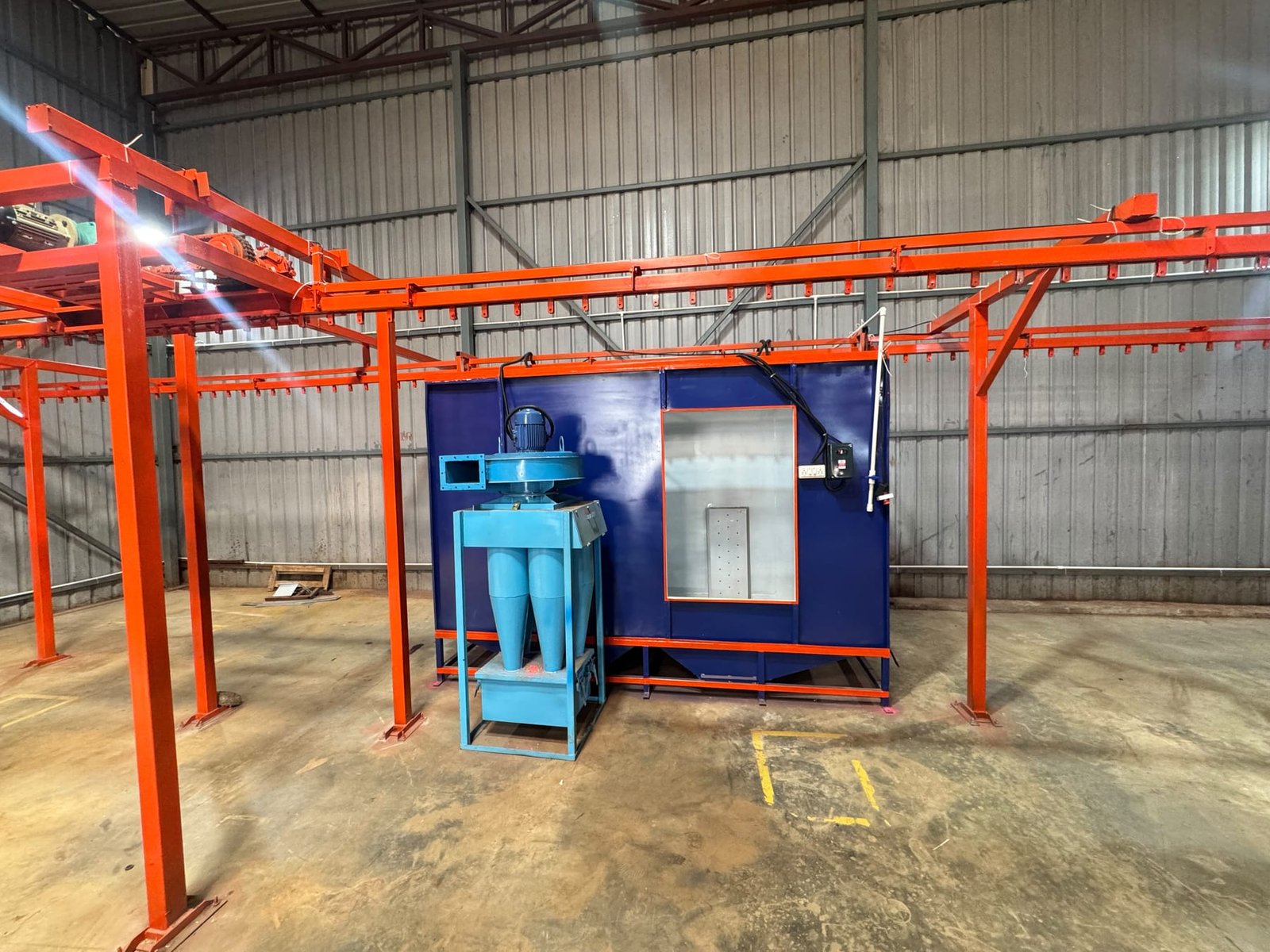
Powder coating is one of the most widely used finishing methods for industrial metal components, valued for the combination of durability and appearance it delivers in a single process.
Shrinath Coatings applies powder coating for fabricators, manufacturers and engineering businesses that need a hard-wearing, even finish on metal parts — from structural brackets to enclosures and machined components.
What is Powder Coating?
Powder coating is a dry finishing process. Instead of a liquid paint carried in a solvent, a finely ground thermoset or thermoplastic powder is applied to a cleaned metal surface using an electrostatic spray gun, which gives the charged powder particles an even attraction to the grounded component.
Once the powder is applied, the component is cured in an oven. Heat causes the powder to melt, flow out and chemically cross-link into a continuous, tightly bonded film. The result is a finish that is generally harder and more chip-resistant than conventional liquid paint, with no drips, sags or solvent odour during application.
How the Process Works
A high-level look at how powder coating is applied. Exact parameters are confirmed per job based on the component and substrate.
Surface preparation
The component is cleaned and prepared so the coating can bond properly. Preparation requirements vary by substrate, condition and application — this is confirmed for each job.
Powder application
Powder is applied using an electrostatic spray gun, which charges the powder particles so they are drawn evenly onto the grounded metal surface, including into corners and recesses.
Curing
The coated component is cured in an oven. Heat melts the powder and cures it into a continuous, durable film that is bonded to the surface.
Cooling & inspection
Once cured, parts are cooled and checked for coverage, finish and consistency before dispatch.
Why Choose Powder Coating
- Hard, durable finish that resists chipping, scratching and abrasion in handling and service
- Uniform coverage across flat and formed surfaces
- Broad choice of colours, gloss levels and surface textures
- No liquid drips, runs or solvent evaporation during application
- Good resistance to fading from regular environmental exposure
Suitable Applications
- Metal brackets, frames and structural components
- Enclosures, panels and equipment housings
- Machinery and equipment parts
- Fabricated sheet metal assemblies
- General industrial and engineering components
Process Considerations
- Powder coating is applied to metal and other electrically conductive substrates so the powder can be electrostatically attracted to the part.
- Component geometry, mounting points (for hanging during coating and curing) and the substrate condition all influence how a part should be prepared and coated — share drawings or samples for an accurate assessment.
- Colour and finish (gloss, matte, textured) can be selected to suit the application — discuss requirements when requesting a quote.
Common Questions About Powder Coating
What is powder coating used for?
Powder coating is commonly used to protect and finish metal components such as brackets, enclosures, panels, machinery parts and fabricated assemblies, giving them a durable, even, coloured finish.
Is powder coating more durable than liquid paint?
Powder coating generally produces a harder, more chip- and scratch-resistant film than conventional liquid paint because it cures into a continuous cross-linked layer rather than drying from a solvent-based liquid.
Can powder coating be applied in different colours and finishes?
Yes. Powder coatings are available in a wide range of colours, gloss levels and textures. Share your requirement when requesting a quote so the right powder can be sourced for the job.
What information do you need to quote a powder coating job?
It helps to know the component material, approximate size and quantity, current surface condition, and the colour/finish you need. Drawings, photos or a sample part make quoting faster and more accurate.